


Stanton in Peak: A Beautiful Village with Ancient History
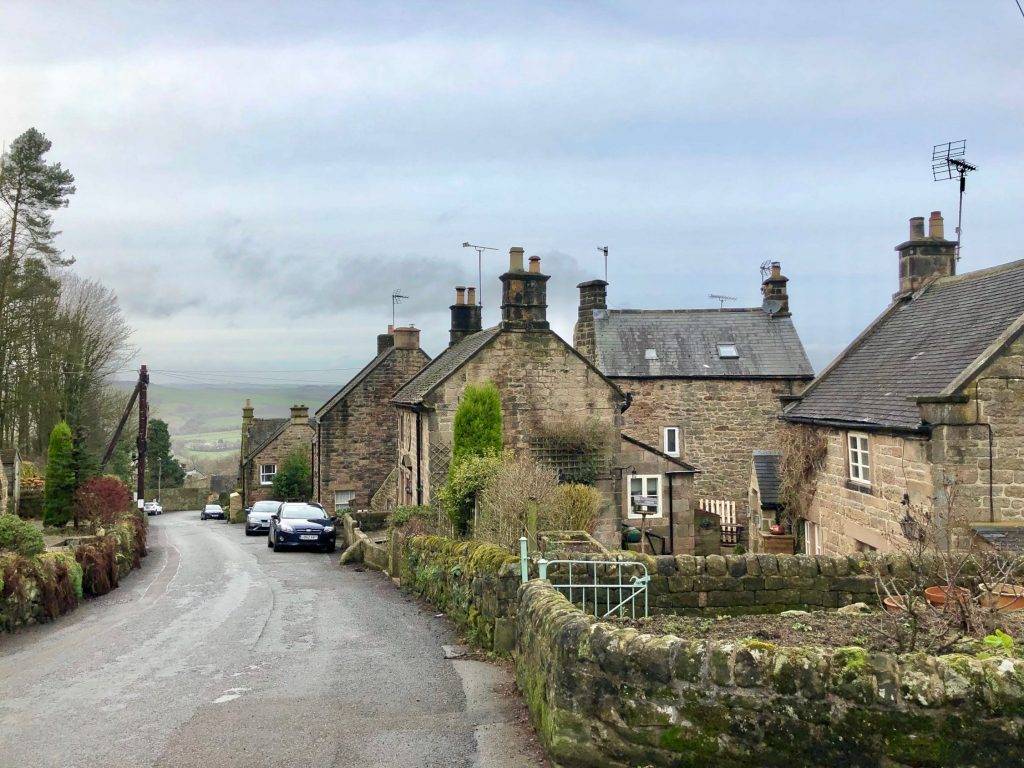
The beautiful village of Stanton in Peak is a little gem: pretty stone cottages clustered on a hillside, overlooking the most spectacular countryside.
Planning a visit? Our comprehensive guide covers everything you need to know, from top attractions and walking routes to practical tips for making the most of your trip to this beautiful Derbyshire village.
History
The village has a great deal of history. It was granted a Royal Charter in 968 under the name Stantune, meaning Stony Farm, and is mentioned in the Domesday Book of 1086 as part of the barony of Henry de Ferrers. By the 1750s the village was jointly owned by the Duke of Rutland and the Thornhill family.
🚌 Bus Routes Serving This Area
The following bus routes serve Stanton in Peak and the surrounding area:
🚏 Nearby bus stops:
- Flying Childers (Adj) ↖ 172 (0 mi) → 172 Live TimesStreet View
- Flying Childers (Opp) ↘ 172 (0 mi) → 172 Live TimesStreet View
- Stanton Hall (adj) ← 172 (0.1 mi) → 172 Live TimesStreet View
- Stanton Hall (opp) ↓ 172 (0.1 mi) → 172 Live TimesStreet View
🚏 Also on this route — places to visit along the way:
The descendants of the Thornhill family still live in the (private) stately home of Stanton Park in the village today. They were responsible for the construction of many of the houses in the village for their estate workers, a number of which bear the initials WPT, which stands for William Pole Thornhill.
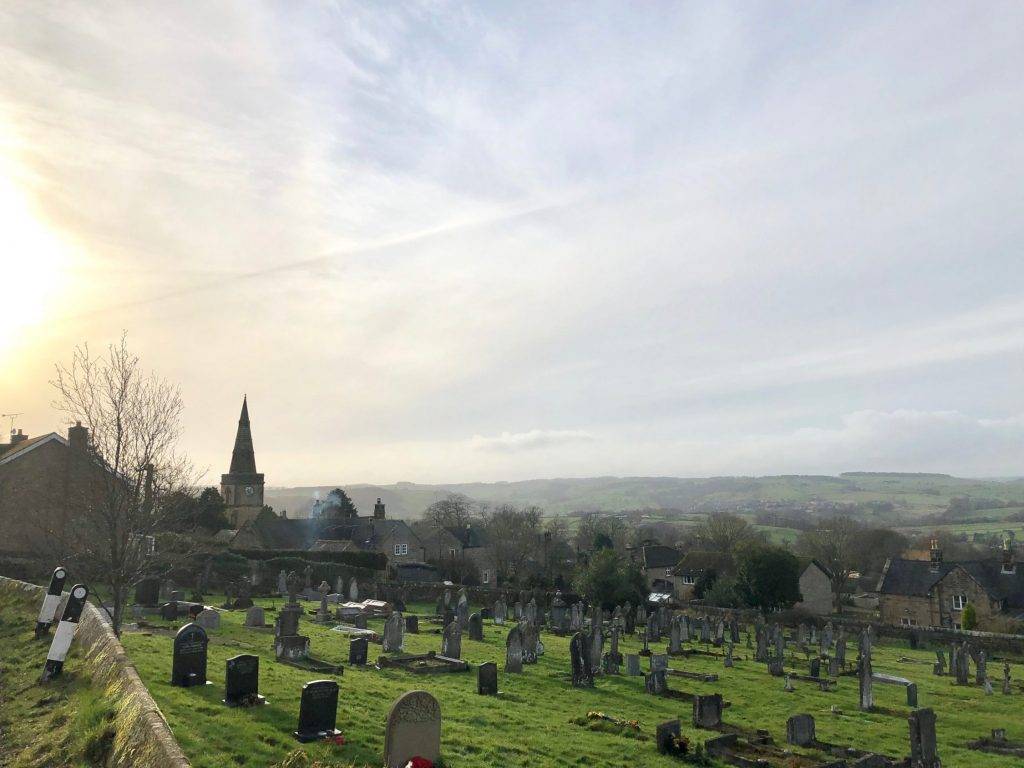
The Thornhill family also arranged the building of the beautiful church of the Holy Trinity, which dates back to the 1830s, as well as the village school and a reading room.
Stanton in Peak Today
Today the village is a great starting place for the many beautiful walks in the surrounding countryside, and a perfect base for exploring the ancient history of the area. The village has a lively community, with a small shop and a lovely pub, The Flying Childers. Stanton in Peak is also close to the romantic Haddon Hall, and the magnificent Chatsworth House.
Stanton Moor
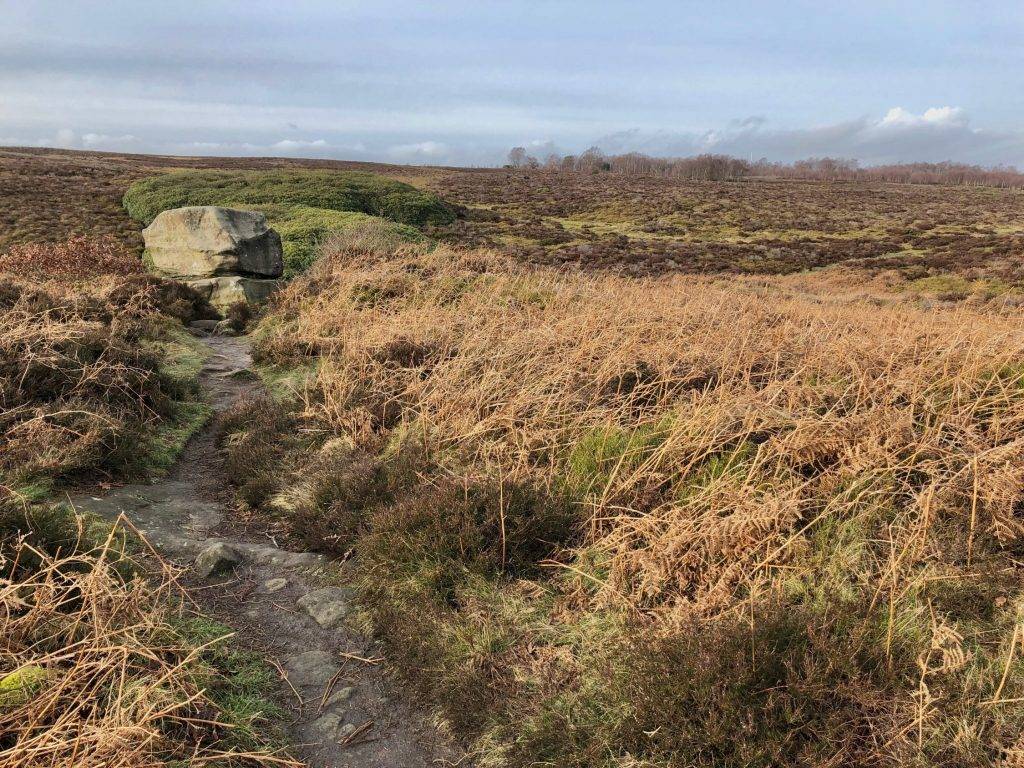
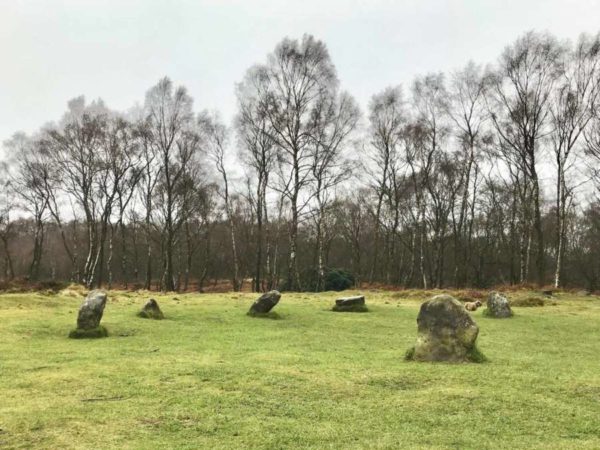
Surrounding the village of Stanton in Peak is the wild and beautiful Stanton Moor. It is so significant in archaeological terms that the entire moor is a Scheduled Ancient Monument. More than 70 burial mounds have been identified on the moor, and it has no less than four Bronze Age stone circles, including the Nine Ladies Stone Circle.
Constructed by the people who lived and worked on the moor 4,000 years ago, the Nine Ladies Stone Circle actually comprises ten standing stones, nine in a ring and one approximately 40 metres away, the King Stone. According to legend, the stones represent nine ladies who were turned to stone for dancing on the Sabbath, and the King Stone represents the fiddler.
Where to Stay in Stanton in Peak
Stanton in Peak offers a range of accommodation options to suit all budgets and preferences. From the Flying Childers pub to charming guest houses and self-catering cottages, there is something for every visitor.
Accommodation Options
- The Flying Childers – lovely pub in the village centre
- Charming guest houses and B&Bs
- Self-catering cottages in the surrounding countryside
- Camping and caravan sites nearby
Top Tips for Your Stanton in Peak Visit
- Best Time to Visit: Spring and summer offer the best weather for exploring the village and Stanton Moor. Autumn brings stunning colours to the surrounding countryside.
- Getting There: Stanton in Peak is accessible by car via the B5056, located between Bakewell and Matlock.
- Parking: There is parking available in the village, including near the church and the Flying Childers pub.
- Don’t Miss: The Nine Ladies Stone Circle on Stanton Moor, and the initials WPT on the estate workers’ cottages.
- Explore: Stanton Moor offers over 70 ancient burial mounds and four Bronze Age stone circles.
Frequently Asked Questions About Stanton in Peak
Is Stanton in Peak worth visiting?
Absolutely! Stanton in Peak is a beautiful village with a rich history, stunning views, and access to the ancient Stanton Moor with its Bronze Age stone circles.
What is Stanton in Peak famous for?
Stanton in Peak is famous for its beautiful stone cottages, its history with the Thornhill family, Holy Trinity Church, and its proximity to Stanton Moor and the Nine Ladies Stone Circle.
How old is Stanton in Peak?
Stanton in Peak was granted a Royal Charter in 968 under the name Stantune and is mentioned in the Domesday Book of 1086.
What is Stanton Moor?
Stanton Moor is a wild and beautiful area surrounding the village, protected as a Scheduled Ancient Monument. It contains more than 70 burial mounds and four Bronze Age stone circles.
What is the Nine Ladies Stone Circle?
The Nine Ladies Stone Circle is a Bronze Age stone circle on Stanton Moor comprising ten standing stones. Legend says nine ladies were turned to stone for dancing on the Sabbath.
Who were the Thornhill family?
The Thornhill family jointly owned the village with the Duke of Rutland from the 1750s. They built many of the houses, the church, the school, and still live at Stanton Park today.
For more information about visiting the area, explore the official Peak District National Park visiting guide and plan your adventure in this remarkable part of Derbyshire.