


A Trip to Ladybower Reservoir and the Upper Derwent Valley
Ladybower Reservoir is the largest and most famous of three reservoirs in the beautiful Upper Derwent Valley, close to the village of Bamford in the Peak District. Set amid stunning scenery of hills, woodlands and moorland on the Derbyshire and Yorkshire border, the three reservoirs cover almost 200 square kilometres. Ladybower is renowned for the drowned villages of Derwent and Ashopton beneath its waters and its connection with the Dambusters bombing missions of 1943, with regular flypasts from the Battle of Britain Memorial Flight. Visitors can enjoy walking and cycling trails around the peaceful shores, admire the impressive dams, and see the famous bellmouth spillways, each 80 feet in diameter.
Ladybower Reservoir is one of three reservoirs located in the beautiful Upper Derwent Valley, close to the village of Bamford in the High Peak area of the Peak District.
Ladybower is the largest and newest of the reservoirs, the other two being the more remote but equally picturesque Derwent Reservoir and Howden Reservoir. The three reservoirs between them cover almost 200 square kilometres and are set amid stunning scenery of hills, woodlands and moorland on the border of Derbyshire and Yorkshire.
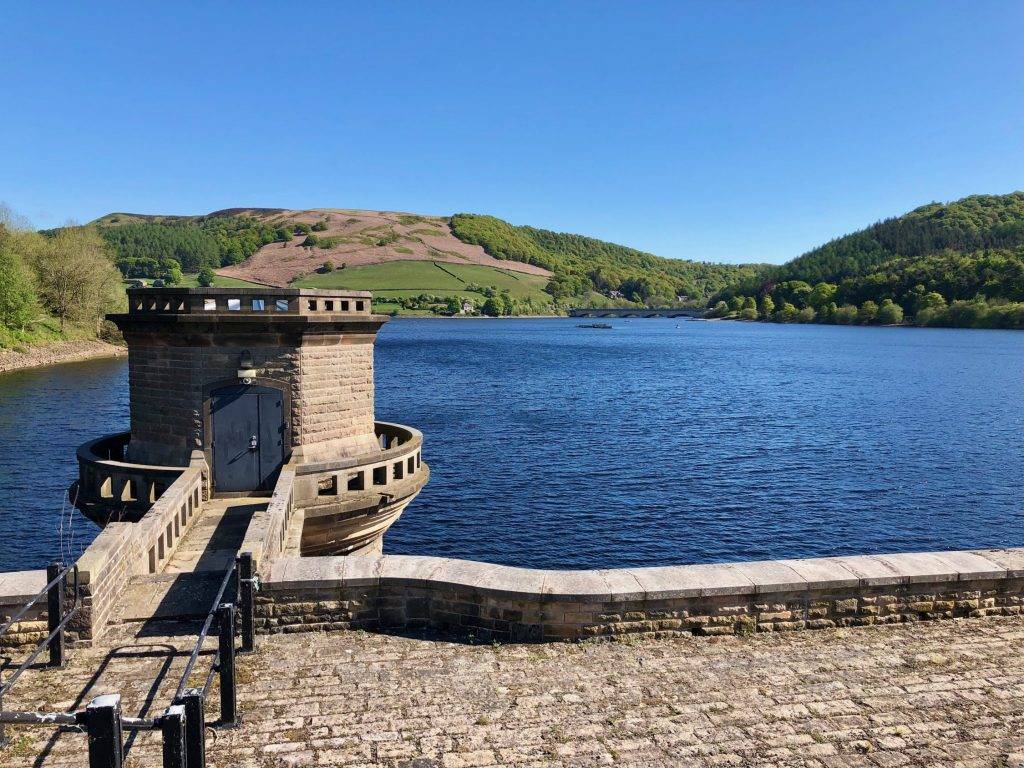
Ladybower Reservoir is perhaps the best known of the three reservoirs, partly because it is renowned for the drowned villages of Derwent and Ashopton that lie beneath its waters and for its connection with the ‘Dambusters’ bombing missions over Germany in 1943. The 1954 film ‘The Dambusters’ was filmed in part on location at Derwent Reservoir, and the Upper Derwent Valley sees regular flypasts from the Lancaster and Spitfire bombers of the Battle of Britain Memorial Flight.
All three reservoirs are accessible from the A57 Sheffield to Glossop road and are well-served with walking/cycling trails around their perimeters. The area receives over 2 million visitors per year, who come to walk or cycle around its peaceful shores, marvel at the impressive dams and fish in its clear waters.

There is a Visitor Information Centre, gift shop, takeaway food kiosk, toilets and bike hire facility located between Ladybower Reservoir and Derwent Reservoir. It’s managed by the Peak District National Park Authority and has a range of information boards about the area.
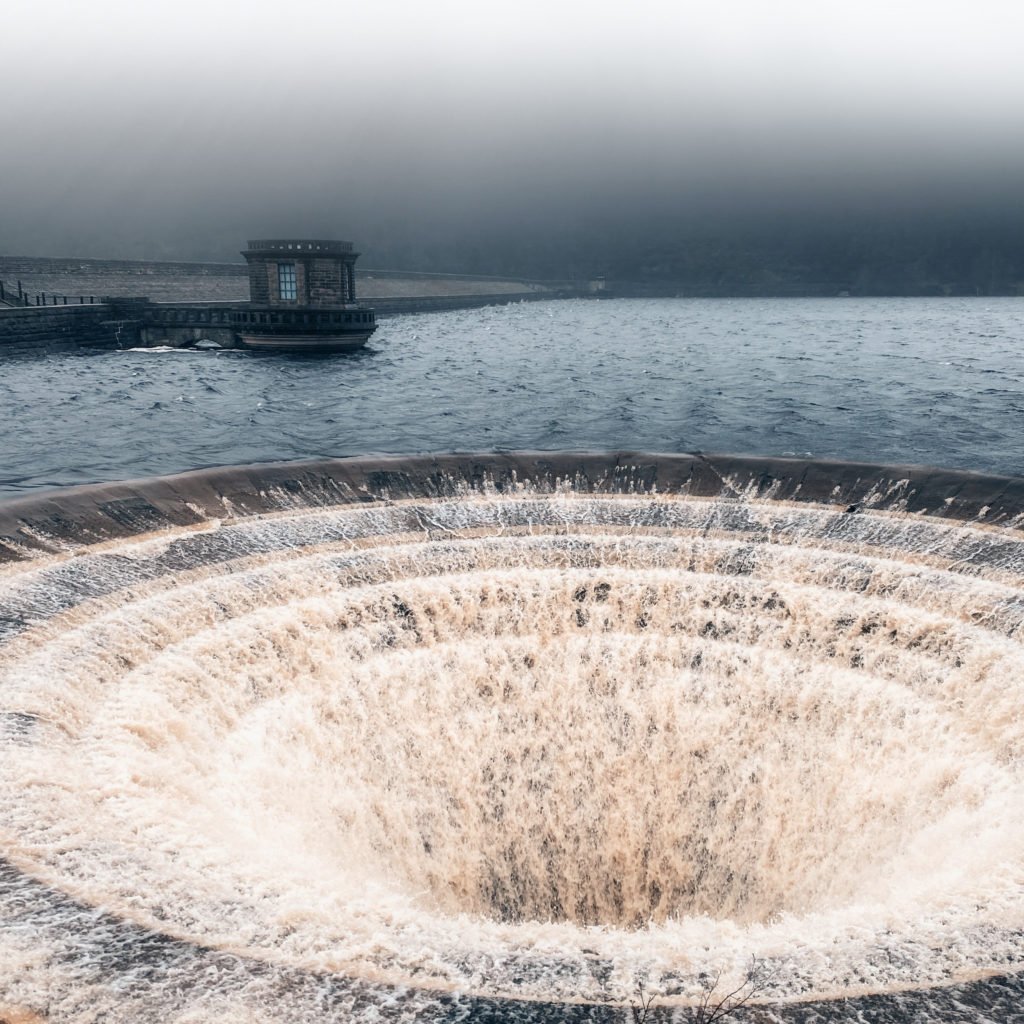
Many people also come to the area to admire the two well-known ‘plugholes’ in Ladybower Reservoir. Each 80 feet in diameter, they’re actually called bellmouth spillways and are there to divert flood water from the reservoir safely under the dam and into the River Derwent. Each plughole discharges into its own valve house at the base of the dam. As the water runs through the valve houses it goes through two hydro-turbines which generate electricity.
How Do I Get to Ladybower Reservoir?
Ladybower Reservoir and the Upper Derwent Valley is well signposted from the A57 Sheffield to Glossop road (Snake Pass). Parking is available at the Visitor Centre and in additional car parks along the approach road. The Visitor Centre postcode is S33 0AQ.
Find out more
For more information about Ladybower Reservoir and the Upper Derwent Valley, including more about the history of this area, the drowned villages of Derwent and Ashopton and a selection of free walks, click on the button below:
If the spectacular scenery of Ladybower Reservoir and the Upper Derwent Valley captured your heart, the Peak District has many more stunning reservoirs and walks to explore. The Walk Around Ladybower Reservoir offers a beautiful circular route, while the beautiful village of Edale lies beneath Kinder Scout. Hathersage is a lovely village nearby with excellent walking routes. Dove Stone Reservoir offers beautiful walking in the far northwest, and Carsington Water is the ninth largest reservoir in England, offering water sports, walking and cycling. Discover more routes at our Walking Trails Guide.
