



Peak District Well Dressings
Each year, the unique and ancient art form of Peak District well dressings comes to life, transforming humble village springs into vibrant mosaics of natural art.
For visitors, the sight of the Peak District well dressings is often a highlight of a summer visit to the Peak District. For locals, it is the culmination of months of planning, a community endeavour, and a proud declaration of heritage.
We will explore the history behind this well dressing custom, explain how these intricate pictures are made from natural materials, and provide a comprehensive guide to the villages that keep the well dressing tradition alive. While exact dates vary from year to year (typically blossoming from May through to September), this guide ensures you know when and where to look to witness this spectacular art form.
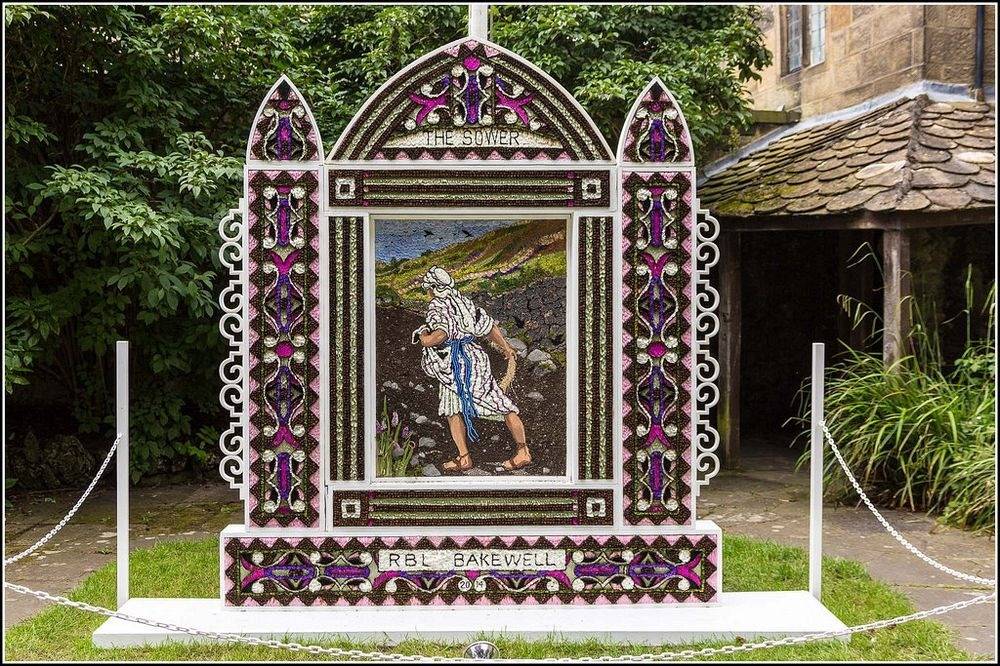
The History and Heritage of Peak District Well Dressings
The History of Peak District Well Dressings
For such a prominent and ancient tradition, the origins of well dressing are wonderfully vague. It is most likely that the custom began as a pagan sacrifice to the gods of water, a ritual to ensure the purity and flow of life-giving springs. However, the tradition as it is widely recognised today began in the late 18th Century, with relatively simple decorations of ribbons and flowers pressed into clay.
The village of Tissington in Derbyshire holds records of some form of basic well dressing dating as far back as 1348, when the village gave thanks for escaping the Black Death that ravaged England. More recently, well dressing has evolved into a celebration of wells and springs, which held enormous significance in villages before fresh water was available on tap. Many of the astounding Peak District well dressings seen today still feature religious themes, or themes of thankfulness for the water that fills our streams, rivers, and reservoirs.
When Christianity arrived in Britain, the church, rather than eradicating such customs, adapted them. The tradition became linked to Rogationtide, a period of prayer for the harvest that typically falls in late spring. During Rogation weeks, priests would lead congregations around the parish boundaries, blessing the crops and the water sources. The decoration of wells became a visual expression of gratitude to God for the gift of water.
Revival and Resilience
The tradition saw a major revival in the 19th century, particularly in Tissington, where records show well dressings taking place continuously since 1348, a year when the village was spared from the Black Death, and the wells were dressed in thanks. This revival spread across the Peak District during the Victorian era, as the Romantic movement fostered a renewed appreciation for rural customs and folklore.
In the 20th century, Peak District well dressings proved remarkably resilient. Even during the Second World War, many villages continued the tradition as a gesture of community spirit and hope. Today, it is stronger than ever, acting as a focal point for village identity and a significant draw for visitors who travel from across the country to witness these ephemeral works of art.
The Spiritual Significance
While well dressing is enjoyed by people of all faiths and none, its spiritual roots remain close to the surface. In many villages, the dressing week begins with a church service followed by a procession to the wells, where hymns are sung and prayers of thanksgiving are offered. The themes depicted on the boards often reflect biblical stories, the Last Supper, the Crucifixion, the Good Shepherd, alongside more contemporary subjects such as jubilees, local landmarks, or anniversaries of historical significance.
This blend of pagan antiquity and Christian observance gives Peak District well dressings a unique character. It is neither purely religious festival nor secular village fete, but something that exists in the space between, a living tradition that has evolved over centuries while maintaining its core purpose of giving thanks for water, the source of all life.
The Art of Dressing a Well
The Materials
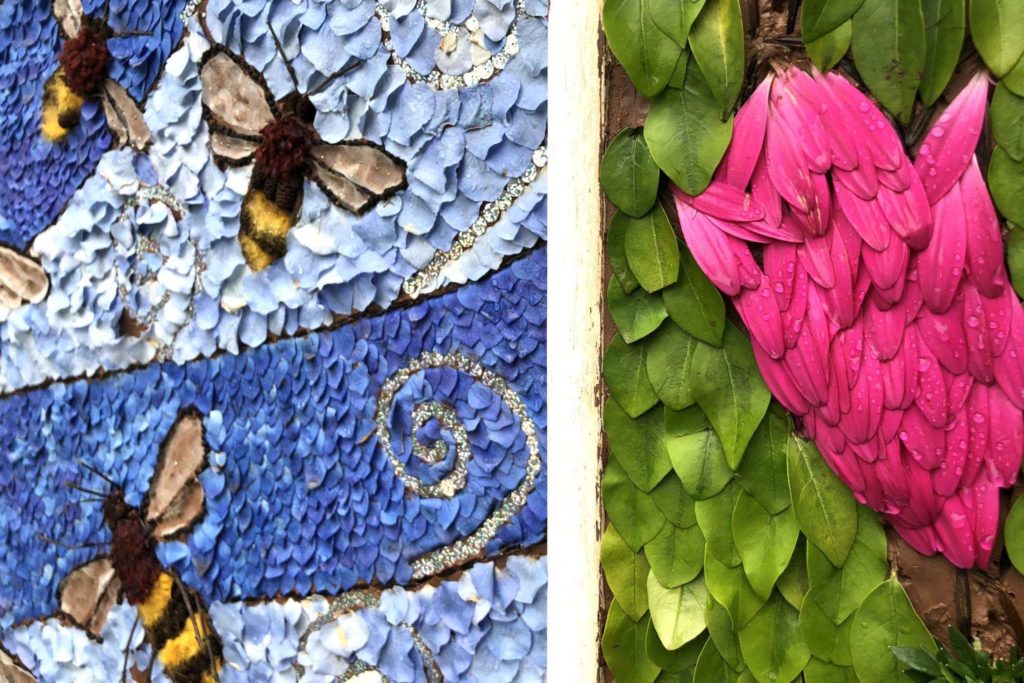
The process of creating a well dressing is laborious and requires immense patience. Unlike a painted canvas, a well dressing is a biodegradable mosaic intended to fade and decay naturally. The materials used are entirely natural, gathered from the surrounding countryside or donated by villagers from their gardens.
How a Well Dressing is Made
Creating a well dressing is a painstaking process that brings the whole community together. Here is how it is done:
- The Boards: Wooden boards are soaked in water for weeks beforehand to soften them. Wet clay is then kneaded to make it pliable, removing air pockets, before being smoothed into the boards to create a flat, even surface.
- The Design: The chosen design is drawn onto large sheets of paper, which are laid onto the clay. The design is then pricked through to create an outline on the clay surface.
- The Materials: The natural materials are added in stages. The dry, most robust materials—such as wood, nuts, seeds, dried berries, and wool are pressed in first. Next comes the foliage: leaves, mosses, and grasses.
- Petalling: The final and most delicate stage is ‘petalling’. Flower petals are added one by one, bringing the colour and final design to life.
- The Blessing: The completed picture is moved, very carefully, to the site of the village well and fixed into position, often blessed in a special ceremony.
A Peak District well dressing will usually last around two weeks before its colours start to fade and the natural materials wither. The materials are then removed, and the boards and clay are stored for use again the following year.
In many villages, creating the dressings is a skill passed down through generations. Local primary schools often get involved, with children making their own smaller dressings, ensuring this unique heritage continues.
Ephemeral Beauty
A well dressing is designed to last. In good weather, the colours remain vibrant for a week or more. But rain, wind, and the natural decay of the materials mean that the dressing will gradually fade and crumble. This ephemeral quality is part of its beauty, a reminder that all things, no matter how carefully crafted, are subject to the passage of time. For this reason, visitors are encouraged to come early in the dressing week to see the works at their peak.
Villages of Tradition – A Rolling Calendar
The Peak District well dressings calendar is a rolling festival. It begins in late spring and runs through the summer, with different villages hosting their “blessing” weeks at staggered times. This allows visitors to chase the tradition across the National Park and its surrounding borders.
Below is a guide to the Peak District well dressings villages, grouped geographically to help you plan your journey. Note that while the core of the tradition lies within the Derbyshire Peak District, several villages on the borders in Staffordshire, Cheshire, and South Yorkshire proudly continue the custom.
Visiting a Peak District well dressings is a free, peaceful, and deeply cultural experience. It offers a quiet counterpoint to the bustle of the summer markets and festivals, allowing you to witness a tradition that is the very heartbeat of Peak District community life. It is, without doubt, one of the most unique things to do in the Peak District.
The Southern Peak & Derbyshire Dales (Early Season)
The season typically kicks off in the southern reaches of the Dales, where the tradition is deeply rooted and the villages are among the most picturesque in the country.
Tissington
Location: Central Derbyshire Dales
Border Status: Within the National Park
Arguably the most famous of all Peak District well dressings, Tissington Well Dressing is often the first major dressing of the season. Tissington is considered the birthplace of the modern revival. The village is an architectural gem, with a main street lined with ancient stone cottages. The village boasts six separate wells: the Hall Well, Yew Tree Well, Town Well, Hands Well, Children’s Well and Coffin Well, each with its own distinct character and history. The Coffin Well, so named because it lies on the route of funeral processions to the church, is particularly atmospheric.
A visit here during dressing week offers a quintessential English village experience. The streets are filled with stalls, the church hosts flower festivals, and the gardens of the historic Tissington Hall are often open to the public. The blessing ceremony, held on Ascension Day, draws large crowds, and the sight of the congregation processing between the wells is deeply moving.
Etwall
Location: South Derbyshire
Border Status: Outside the National Park boundary
Moving slightly outside the National Park boundary, Etwall Well Dressing is a significant early event. Etwall demonstrates how the tradition extends beyond the limestone uplands into the lowlands of South Derbyshire. The village, which lies between Derby and Burton upon Trent, maintains the custom with enthusiasm and vibrant displays. Etwall’s dressings are typically displayed on the village green, and the event coincides with a carnival that includes a procession, live music, and family entertainment. For those staying in the southern part of the county, Etwall offers an accessible introduction to the tradition.
Ashford-in-the-Water
Location: Derbyshire Dales
Border Status: Within the National Park
Famous for its medieval sheep bridge spanning the River Wye, Ashford-in-the-Water offers a stunning setting for a Peak District well dressings. The Ashford-in-the-Water Well Dressing usually occurs a little later in May. The village is renowned for the high artistic quality of its dressings, often featuring intricate designs that rival fine art paintings in their detail. The dressings are displayed near the river, and visitors can combine viewing with a riverside walk to the nearby town of Bakewell.
Bakewell
Location: Derbyshire Dales
Border Status: Within the National Park
The largest town in the Peak District National Park, Bakewell hosts its Bakewell Well Dressing during its annual carnival week. Given its popularity, this is one of the busiest dressings to visit. The town dresses several wells, including the Town Well on Rutland Square and the well at the entrance to the churchyard. The event coincides with a carnival procession that draws thousands of visitors to the home of the famous Bakewell Pudding. For those who prefer a livelier atmosphere, Bakewell offers the perfect blend of tradition and tourism, with ample parking, shops, and places to eat.
Youlgrave (and Middleton by Youlgrave)
Location: Derbyshire Dales
Border Status: Within the National Park
The neighbouring villages of Youlgrave and Middleton-by-Youlgrave are stalwarts of the tradition. Youlgrave Well Dressing and Middleton by Youlgrave Well Dressing typically take place within days of each other, allowing visitors to experience two distinct village characters in one journey.
Youlgrave, often spelled “Youlgreave” historically, is one of the largest villages in the White Peak, with a rich history of lead mining and agriculture. Its well dressings are displayed at several sites around the village, including the historic Conksbury Bridge. Middleton-by-Youlgrave is a smaller, more intimate settlement, where the dressing is often displayed at the village pump. Both villages offer a chance to wander narrow lanes, chat with volunteers, and experience the tradition away from the largest crowds.
The White Peak Villages (High Summer)
As summer arrives, the heart of the White Peak, characterised by limestone walls, ancient lead mining history, and some of the most dramatic dales in the National Park, comes alive with dressings.
Wirksworth
Location: Derbyshire Dales
Border Status: Outside the National Park
An ancient market town with a rich history of lead mining, Wirksworth Well Dressing is a major event. The town is known for its artistic community, and the dressings here often reflect contemporary themes alongside traditional biblical scenes. Wirksworth boasts a unique tradition: the “Well Dressing Court” and the crowning of a Well Dressing Queen, who leads the procession through the town’s steep, cobbled streets. The ceremony is dramatic, with the wells located at various points around the town centre, each offering a different perspective on the town’s history and character.
Monyash, Over Haddon & Lathkill Dale
Location: Derbyshire Dales
Border Status: Within the National Park
These villages are clustered around the Lathkill Dale nature reserve, one of the most beautiful dales in the Peak District. Monyash Well Dressing, Over Haddon Well Dressing, and the nearby Bakewell dressings create a dense network of events.
Monyash is a quiet village centred around a large village green and a duck pond. Its well dressing is a community affair, often incorporating local themes related to farming and the surrounding landscape. Over Haddon, perched on the edge of Lathkill Dale, offers spectacular views down the dale. Visiting this area in late June allows you to walk between villages along footpaths, combining a ramble through stunning countryside with cultural discovery. The Lathkill Dale walk, which takes in both villages, is one of the most rewarding in the Peak District.
Tideswell
Location: Derbyshire Dales
Border Status: Within the National Park
Known as the “Cathedral of the Peak” due to its magnificent St John the Baptist Church, Tideswell is a vibrant village. Tideswell Well Dressing is a major highlight of the summer calendar, usually featuring multiple wells displayed around the churchyard and the town centre. The dressings here are known for their ambitious scale and intricate detail.
Eyam
Location: Derbyshire Dales
Border Status: Within the National Park
The “Plague Village” of Eyam is world-famous for its sacrifice during the bubonic plague of 1665–66. Eyam Well Dressing takes on a special poignancy here. The dressings often incorporate themes of remembrance and community resilience, honouring the villagers who quarantined themselves to stop the plague spreading north. The wells are located around the village, including near the churchyard where many plague victims are buried. A visit to Eyam during dressing week combines cultural tradition with a profound historical narrative. The village museum and the surrounding walks to the “plague cottages” make this a deeply moving day out.
Foolow
Location: Derbyshire Dales
Border Status: Within the National Park
A picture-postcard village with a traditional duck pond, Foolow Well Dressing is a late-summer delight. The setting is idyllic, with stone cottages clustered around the green. Foolow is smaller than many of the other dressing villages, offering a quieter, more intimate experience. It is an excellent choice for those seeking to escape the crowds while still experiencing the tradition at its most authentic.
The Dark Peak & Northern Moorlands
Moving north and west, the gritstone edges of the Dark Peak provide a rugged, dramatic backdrop for the tradition. Several villages here sit on the borders of Staffordshire and Cheshire, demonstrating how the custom has spread beyond the Derbyshire heartland.
Buxton
Location: Derbyshire
Border Status: Outside the National Park
The spa town of Buxton is the largest settlement in the northern Peak District. Buxton Well Dressing is a major event. The town dresses several sites, most notably St Anne’s Well on The Crescent a site of natural thermal waters that have been revered since Roman times. This dressing connects the ancient pagan tradition directly to the town’s Roman heritage. The Crescent, recently restored to its Georgian splendour, provides a magnificent backdrop. Other dressings are displayed in the Pavilion Gardens and around the town centre. Buxton’s event is one of the most accessible, with excellent transport links and a wide range of accommodation and dining options.
Bollington
Location: Cheshire
Border Status: Western Edge of the Peak District
Bollington Well Dressing is a testament to the reach of the tradition beyond the Derbyshire border. Nestled in the foothills of the western Peak District (the “Happy Valley”), Bollington’s event is a significant fixture for Cheshire. The village, known for its cotton mill history and its proximity to the Macclesfield Canal, dresses its wells with great enthusiasm. This marks the westernmost extent of the core tradition covered in this guide, showing how the custom has crossed county boundaries while retaining its essential character.
Whaley Bridge & Chapel-en-le-Frith
Location: Derbyshire / Cheshire Border
Border Status: Adjacent to the National Park
These towns sit on the western fringe of the National Park. Whaley Bridge Well Dressing and Chapel-en-le-Frith Well Dressing are key events for the High Peak region.
Whaley Bridge, situated at the head of the Goyt Valley, is known for its canal basin and its dramatic setting beneath the gritstone edges. The dressings here are often displayed alongside a carnival and a classic car rally.
Chapel-en-le-Frith is an ancient market town with a wide main street and a historic church. Its well dressings are displayed near the church and around the town centre. The town’s name, “Chapel in the Forest”, speaks to its ancient origins, and the tradition here has been maintained for generations.
Hayfield
Location: Derbyshire
Border Status: Northern Fringe of the National Park
Nestled at the foot of Kinder Scout, the site of the famous Mass Trespass that secured access rights to open moorland, Hayfield Well Dressing is a celebration of both tradition and radical history. The village provides a stunning gateway to the northern moors. The dressings are displayed on the village green and around the church, and the event often includes a parade and live music. For walkers, Hayfield is an ideal base, with routes leading up onto Kinder Scout and the surrounding edges.
Mellor
Location: Greater Manchester / Derbyshire Border
Border Status: Outside the National Park
While Mellor Well Dressing is technically in Greater Manchester, it sits on the high ground overlooking the western Peak District. It is a prime example of how the tradition spills over the county lines into the neighbouring conurbations while maintaining a strong sense of village identity. Mellor’s event is well-regarded, with dressings displayed at the village cross and around the historic church, which sits on the site of an Iron Age hillfort.
The Eastern Valleys & Borderlands
On the eastern side of the Peak District, the tradition flows into the valleys leading toward Sheffield, Chesterfield, and Nottinghamshire, adapting to more urban settings while retaining its rural heart.
Dore
Location: South Yorkshire (Sheffield Border)
Border Status: Outside the National Park
Dore Well Dressing is one of the southernmost villages within the city of Sheffield. Situated on the edge of the Peak District, Dore represents the tradition’s reach into South Yorkshire. The village green becomes a hub of activity, blending urban accessibility with rural charm. Dore’s dressing is typically accompanied by a village fete, and its location on the Sheffield–Manchester railway line makes it one of the most accessible well dressing events for visitors from the city.
Harthill, Clowne, & Elmton
Location: North-East Derbyshire / Nottinghamshire Border
Border Status: Outside the National Park
These villages are situated on the eastern fringes of the Peak District, where the limestone plateau gives way to the coalfields of North East Derbyshire. Harthill Well Dressing, Clowne Well Dressing, and Elmton Well Dressing are crucial for preserving the custom in this area. They often have a strong sense of local rivalry and pride, producing dressings of exceptional quality. Clowne, in particular, has a well-established tradition, with dressings displayed at multiple sites around the village. For those exploring the eastern Peak District, these villages offer a fascinating glimpse of how the custom adapts to different landscapes.
Crich
Location: Derbyshire (Amber Valley)
Border Status: Outside the National Park
Famous for its National Tramway Museum, Crich is a hilltop village with a commanding view across the Derwent Valley. Crich Well Dressing is a highlight of the early July calendar. The village typically dresses its well on the historic Market Place, alongside the famous “Crich Stand” war memorial. The stand, which offers panoramic views of the Peak District, is often open during dressing week. Crich’s event combines industrial heritage with ancient tradition, making it a unique stop on the well dressing circuit.
Belper
Location: Derbyshire (Amber Valley)
Border Status: Outside the National Park
A historic mill town on the River Derwent, Belper Well Dressing is a significant event for the lower Derwent Valley. While Belper is a large town, the tradition is fiercely protected by local residents, and the dressings are usually found at the “Fountain” and other historic water sources in the town centre. Belper’s event often coincides with a carnival and a series of community events. As a UNESCO World Heritage site (part of the Derwent Valley Mills), Belper offers visitors the chance to combine well dressing with an exploration of the Industrial Revolution.
The Staffordshire Moorlands
Several villages in the Staffordshire Moorlands, though technically outside the Derbyshire Peak District boundary, are integral to the tradition due to their proximity and cultural ties to the region.
Biddulph Moor, Endon, & Wetton
Location: Staffordshire Moorlands
Border Status: Outside the National Park (except Wetton, which lies within)
Biddulph Moor Well Dressing, Endon Well Dressing, and Wetton Well Dressing anchor the tradition in Staffordshire.
- Biddulph Moor is a high, exposed village with a strong community focus. The village sits on the Staffordshire–Cheshire border, and its well dressing is a major local event.
- Endon is a large village near the Caldon Canal, hosting its dressings with a vibrant carnival atmosphere. The village is easily accessible from Stoke-on-Trent and the Potteries.
- Wetton is located in the Manifold Valley, one of the most beautiful and remote parts of the White Peak. A visit to Wetton Well Dressing offers a chance to explore Thor’s Cave and the dramatic limestone scenery of the Staffordshire Peak District. The setting is spectacular, with the dressing often displayed near the river, surrounded by towering limestone cliffs.
Late Season Dressings (August & September)
As summer wanes and the tourist crowds begin to thin, the tradition continues, with several villages holding their dressings in late summer and early autumn. These later events offer a quieter, more reflective experience.
Bradwell
Location: Derbyshire Dales
Border Status: Within the National Park
Located in the Hope Valley, Bradwell Well Dressing is a significant event that often marks the start of the late-season run. The village has a strong industrial heritage, with a history of lead mining and agriculture, and the dressings often reflect this local character. The Hope Valley offers spectacular walking country, and a visit to Bradwell can be combined with a hike along the River Noe or a trip to the nearby village of Castleton.
Taddington & Wormhill
Location: Derbyshire Dales
Border Status: Within the National Park
Perched on the limestone plateau above the Wye Valley, Taddington Well Dressing and Wormhill Well Dressing are intimate village affairs. They occur in late August, offering a quieter, more reflective experience away from the summer crowds.
Taddington is a small village with a historic church and a village green. Its dressing is often displayed at the village pump. Wormhill, located nearby, is even smaller, with a scattering of stone cottages and a famous tea room that draws visitors from across the region. Both villages offer a glimpse of well dressing at its most traditional—community-led, unhurried, and deeply connected to the local landscape.
Longnor
Location: Staffordshire / Derbyshire Border
Border Status: Within the National Park
A historic market town perched on a hilltop overlooking the Dove Valley, Longnor Well Dressing is a highlight of early September. The village square, with its cobbles and old market hall, provides a timeless setting. Longnor was once a significant market town for the surrounding farming communities, and its well dressing reflects this agricultural heritage. The views from the village across the Dove Valley towards Chrome Hill and Parkhouse Hill are among the finest in the Peak District.
Hartington
Location: Derbyshire Dales
Border Status: Within the National Park
Famous for its cheese and its picturesque village green, Hartington Well Dressing rounds off the season in mid-September. It is a fitting finale, held in one of the most beautiful villages in the Peak District. Hartington’s green is surrounded by stone cottages, a historic church, and the famous Hartington Cheese Shop. The dressing is typically displayed near the village square, and the event coincides with a flower festival and other community activities. Visitors can enjoy the tradition as the autumn colours begin to appear, with the surrounding limestone dales offering spectacular walking opportunities.
Spital Cemetery Well Dressing (Chesterfield)
Location: Derbyshire (Chesterfield)
Border Status: Outside the National Park
A unique entry on the calendar, Spital Cemetery Well Dressing is unlike any other. Located in Chesterfield (just outside the National Park), this dressing takes place in a cemetery setting. It is a poignant, reflective event that honours the deceased and demonstrates the deep, sometimes solemn, connection between water, life, and remembrance. The dressing is displayed at the cemetery’s historic well, and the event often includes a service of remembrance. For those interested in the more contemplative aspects of the tradition, Spital offers a deeply moving experience.
Completing the Picture: Further Villages
The tradition extends to many more villages and hamlets, each adding its own character to the Peak District well dressings calendar. These include:
- Derby St Alkmund’s: An urban dressing in the city of Derby, proving the tradition survives in urban settings.
- Cressbrook: A historic mill village in the Wye Valley, known for its picturesque setting and its connection to the cotton industry.
- Flash: The highest village in Britain, located on the Staffordshire Moorlands border, offering a truly unique setting.
- Edlaston and Wyaston: Two small villages near Ashbourne that collaborate on their displays, demonstrating the cooperative spirit of the tradition.
- Litton: A charming village near Tideswell in the White Peak, with a strong sense of community.
- Swanwick: Located in the Amber Valley area, east of the National Park, maintaining the tradition in a more suburban setting.
- Rowsley: A village at the confluence of the Wye and Derwent rivers.
- Bamford: Located in the Hope Valley, with an “in the making” event allowing visitors to see the construction process before the official display, a rare opportunity to witness the artistry up close.
- Dronfield Woodhouse: A suburb of Dronfield near Sheffield, showing the tradition’s reach into urban fringes.
- Little Longstone: A tiny, beautiful village in the Wye Valley near Monsal Dale, offering a quintessential Peak District experience.
- Peak Forest: A high-altitude village on the Chapel-en-le-Frith plateau, named for its location at the edge of the ancient Forest of High Peak.
- Heath: A village near Chesterfield with a distinct tradition, known for its historic hall and church.
- Bonsall: A hillside village near Matlock with a strong mining heritage, where the well dressing is displayed alongside an annual walking festival.
This is by no means an exhaustive list; new villages occasionally revive the custom, and longstanding ones continue to flourish, ensuring the tradition remains vibrant across the region.
Practical Guidance for Visitors
How to Find Current Dates
Because well dressing dates follow local traditions and often tie to religious festivals such as Ascension Day, they shift slightly each year. To plan your visit, it is best to consult local visitor information centres, village websites, and the tourism websites for the Peak District. Searching for the current year’s calendar will yield the most accurate information. Also, see our guide and filter by ‘Event Type‘ > ‘Well Dressing‘ to see an upcoming list… click here
General Seasonal Sequence
As a general guide, the sequence of Peak District well dressings follows a familiar pattern:
- May: Tissington, Etwall, Ashford, Bollington (Cheshire).
- June: Wirksworth, Youlgrave, Middleton, Tideswell, Bakewell.
- July: Buxton, Crich, Harthill, Dore, Whaley Bridge.
- August: Bradwell, Clowne, Bonsall.
- September: Foolow, Eyam, Hartington, Longnor, Spital.
What to Expect When You Visit
Most villages host their dressings for a week, with the blessing ceremony typically taking place on the first day (often a Saturday or Sunday). The dressings remain on display for several days afterwards, though natural fading means the colours are brightest early in the week.
Visitors can expect:
- Crowds: Popular villages such as Tissington, Bakewell, and Eyam can become very busy, especially on blessing day and weekends. Arriving early in the day or later in the afternoon can help avoid the worst congestion.
- Parking: Many villages set up temporary car parks for dressing week. Follow local signage and be prepared to walk a short distance to the wells.
- Amenities: Larger villages and towns have public toilets, cafes, and shops. Smaller villages may have limited facilities, so plan accordingly.
- Accessibility: Many well dressing sites are located in historic village centres with uneven surfaces. Some may be difficult to access for those with mobility issues. Check village websites for accessibility information if needed.
Etiquette and Appreciation
Well dressings are the result of hundreds of hours of voluntary labour. Visitors are encouraged to:
- Admire but do not touch. The materials are delicate, and even a gentle touch can damage the surface.
- Donate. Many villages place collection boxes near the wells. Donations help fund materials and ensure the tradition continues.
- Respect private property. Dressings are often displayed in gardens or on private land. Observe any barriers or signage.
- Take photographs responsibly. Use a camera without flash where possible, and be mindful of other visitors.
Why This Tradition Endures
In an age of digital screens, rapid change, and increasing disconnection from the natural world, the survival of well dressing is remarkable. It endures because it requires physical community. Neighbours gather in village halls to prick petals; children collect moss from the woods; the elderly share memories of dressings past. It is a tradition that forces you to slow down, to look closely at the detail of a seed or the hue of a petal.
For the visitor, seeking out these well dressings in the Peak District offers more than just a photo opportunity. It offers a key to understanding the soul of the region, a deep-rooted connection to the land, to water, and to the communities that have thrived here for centuries.
Whether you visit the famous wells of Tissington, the plague memorials of Eyam, the urban dressings of Chesterfield, or the border traditions in Staffordshire and Cheshire, you are participating in a ritual that has connected humanity to nature for millennia.
Start your journey. Follow the flower trails through the dales. And discover why the Peak District’s water has never been more beautifully celebrated.
