


Birchover: A Characterful Village Steeped in Ancient History
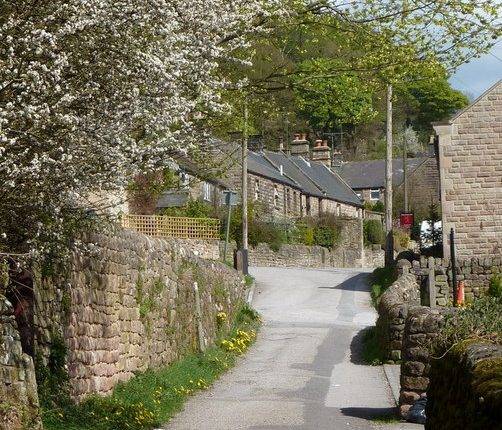
The pretty village of Birchover lies on the south eastern border of the Peak District National Park. It is a characterful village, surrounded by the most stunning scenery. Although only five miles out of the town of Matlock, it stands amid the most magnificent open moorland that is steeped in history.
Planning a visit? Our comprehensive guide covers everything you need to know, from top attractions and walking routes to practical tips for making the most of your trip to this beautiful Derbyshire village.
Ancient History
Birchover is an ancient village, mentioned in the Domesday Book of 1086. It has a collection of beautiful old cottages, many built of the distinctive pink gritstone from the Stanton Moor quarries located above the village.
🚌 Bus Routes Serving This Area
The following bus routes serve Birchover, Rowtor Rocks and Nine Ladies Stone Circle and the surrounding area:
🚏 Nearby bus stops:
- The Green (Adj) ← 172 (0.1 mi) → 172 Live TimesStreet View
- The Green (Opp) → 172 (0.1 mi) → 172 Live TimesStreet View
- Cratcliff View (Adj) ↘ 172 (0.4 mi) → 172 Live TimesStreet View
- Cratcliff View (Opp) ↖ 172 (0.4 mi) → 172 Live TimesStreet View
🚏 Also on this route — places to visit along the way:
The village today is small but has a thriving sense of community, with a number of festivals and events held throughout the year. It has a village shop and two pubs. The Druid Inn has a great reputation for food and real ales, and also has an interesting history, being reputedly once the meeting place of the Druids who used the area around Birchover for ceremonial worship. The Red Lion dates from 1680 and was built on the site of a farm. Just inside the entrance is a 30 feet deep well, thankfully covered over with glass.
Rowtor Rocks
As interesting as the village is, however, for many visitors it is the area surrounding Birchover that holds the most fascination.
On the outskirts of the village lies the mysterious cave complex of Rowtor Rocks, consisting of numerous interlinked tunnels and caverns, some man-made. Many of the rocks have been carved with intricate symbols and pictures, including serpents, circles and cups. A series of steps, thrones and altars have also been fashioned out of the stone in a number of places.
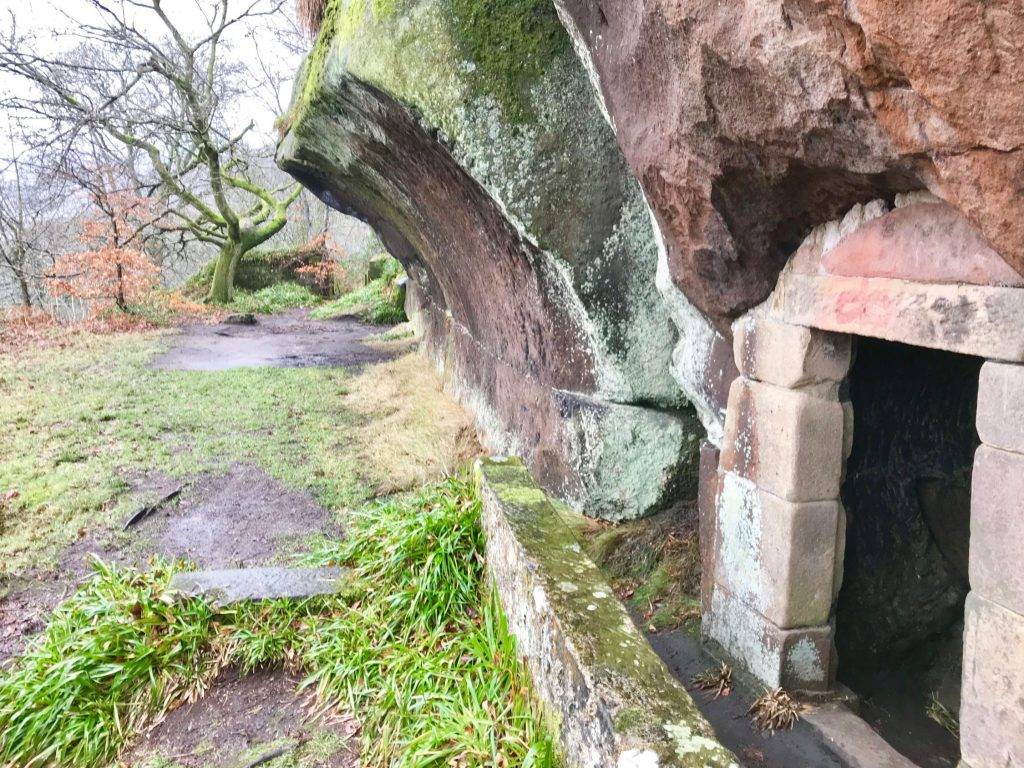
The carvings reputedly date from the 17th Century and are the handiwork of a very intriguing individual, the local parson of the village, Reverend Thomas Eyre (d. 1717).
Despite being a man of the cloth, Thomas Eyre was a Druid who reputedly practised witchcraft. It is believed that he used Rowtor Rocks in his Druid ceremonies, and also wrote his village sermons sitting on the seats he had carved, looking out over the landscape. Two of the caves were reputedly created by Thomas Eyre in which to entertain his friends.
Thomas Eyre, who lived at Rowtor Hall, was also responsible for building a private chapel below Rowtor Rocks. The building still survives to this day and is now the parish church of St Michael. It is unusual in that it has no windows at all on its two main sides.
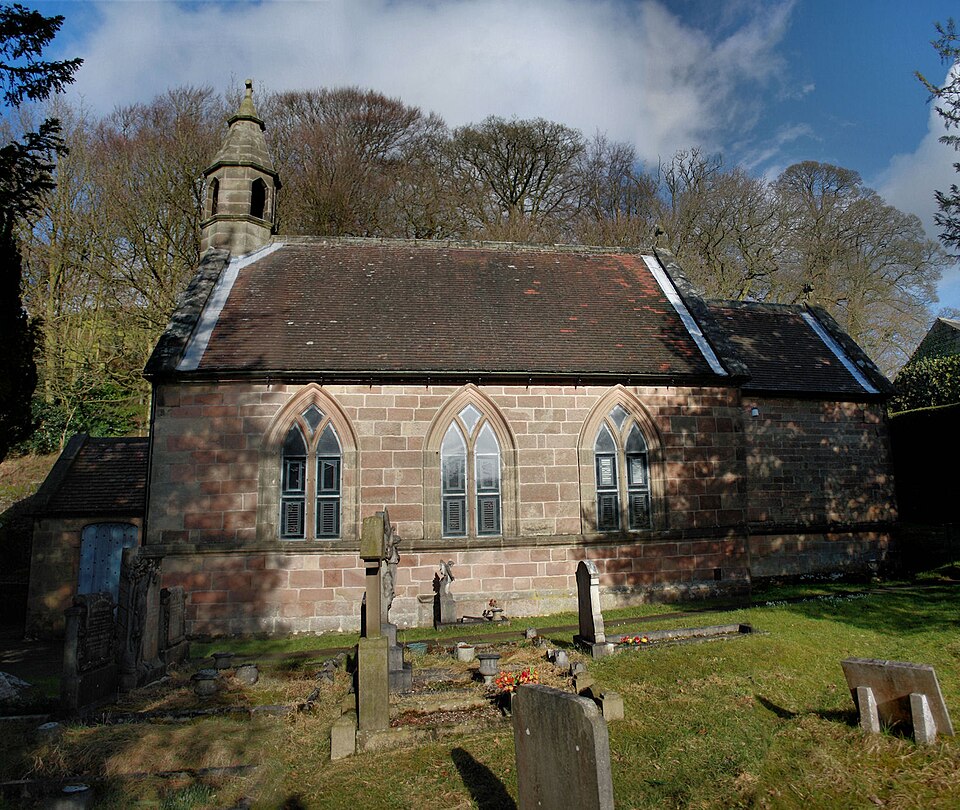
Credit: Robert Cutts
Nine Ladies Stone Circle
Just above the village of Birchover is an area of open moorland, Stanton Moor. Because of its archaeological importance, the entirety of the moor is protected as a Scheduled Ancient Monument. There are more than 70 ancient burial mounds upon the moor, and no less than four Bronze Age stone circles, constructed by the people who lived and worked on Stanton Moor around 4,000 years ago. There is also still evidence of 17th and 18th Century packhorse routes, hollowed-out tracks in the heather made by the hooves of horses transporting goods from Cheshire and Sheffield.
The largest and best known of the stone circles on Stanton Moor is the Nine Ladies Stone Circle, comprising ten standing stones, nine in a rough ring configuration and the tenth some 40m away from the circle. It gets its name from a legend that nine ladies were turned to stone as a punishment for dancing on the Sabbath, with the tenth stone, or King Stone, being the fiddler. There is evidence that the Nine Ladies Stone Circle was used in ancient times for ceremonies and rituals concerning life and death. It is still a location for Druid and pagan worship, and is visited by many people on each solstice.
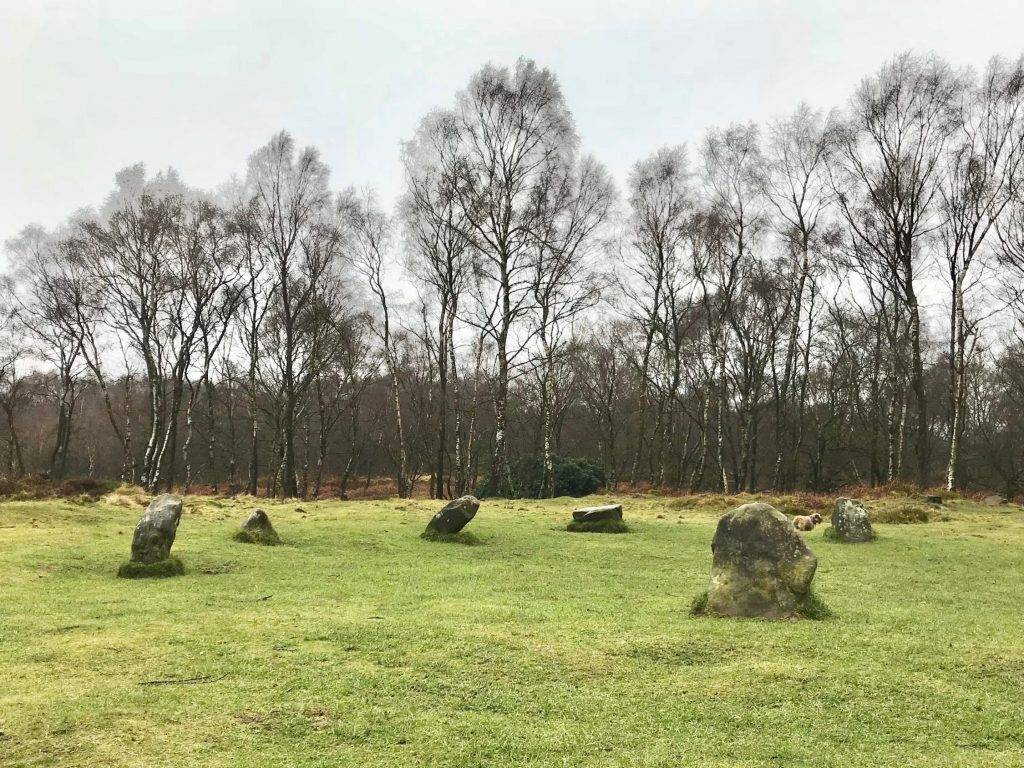
Slightly smaller, with six standing stones, is Doll Tor, also dating from the Bronze Age. The site has been excavated a number of times, and during an excavation in the 1930s three of the six stones were broken and repaired.
Where to Stay in Birchover
Birchover offers a range of accommodation options to suit all budgets and preferences. From the historic Druid Inn to charming guest houses and self-catering cottages, there is something for every visitor.
Accommodation Options
- The Druid Inn – historic pub with rooms
- The Red Lion – traditional pub dating from 1680
- Charming guest houses and B&Bs
- Self-catering cottages in the surrounding countryside
- Camping and caravan sites nearby
Top Tips for Your Birchover Visit
- Best Time to Visit: Spring and summer offer the best weather for exploring the moorland and stone circles. The solstices are particularly special at Nine Ladies Stone Circle.
- Getting There: Birchover is accessible by car via the B5056, located between Bakewell and Matlock.
- Parking: There is parking available in the village, including near the pubs and Rowtor Rocks.
- Don’t Miss: The mysterious Rowtor Rocks, the Nine Ladies Stone Circle, and the Druid Inn.
- Explore: Stanton Moor offers over 70 ancient burial mounds and four Bronze Age stone circles.
Frequently Asked Questions About Birchover
Is Birchover worth visiting?
Absolutely! Birchover is a characterful village with a fascinating history, mysterious cave carvings, ancient stone circles, and stunning moorland scenery.
What is Birchover famous for?
Birchover is famous for the mysterious Rowtor Rocks, its connection to Druid history, the Nine Ladies Stone Circle on Stanton Moor, and its two historic pubs.
What is Rowtor Rocks?
Rowtor Rocks is a mysterious cave complex with interlinked tunnels and caverns, featuring intricate carvings of serpents, circles and cups, carved by Reverend Thomas Eyre in the 17th Century.
Who was Thomas Eyre?
Thomas Eyre was the local parson of Birchover in the 17th Century. Despite being a man of the cloth, he was a Druid who reputedly practised witchcraft and carved the symbols at Rowtor Rocks.
What is the Nine Ladies Stone Circle?
The Nine Ladies Stone Circle is a Bronze Age stone circle on Stanton Moor, comprising ten standing stones. Legend says nine ladies were turned to stone for dancing on the Sabbath.
What is Doll Tor?
Doll Tor is a smaller Bronze Age stone circle on Stanton Moor with six standing stones. It has been excavated several times, with three of the six stones being broken and repaired in the 1930s.
For more information about visiting the area, explore the official Peak District National Park visiting guide and plan your adventure in this remarkable part of Derbyshire.